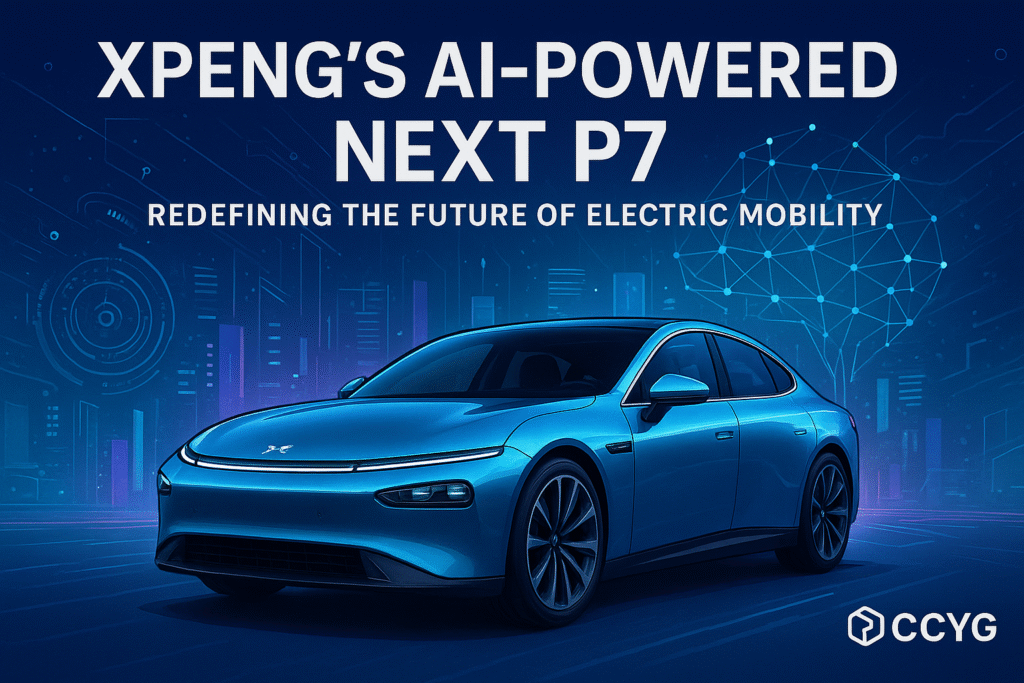
Electric vehicles (EVs) are no longer just about sustainability—they’re about intelligence, speed, endurance, and the integration of advanced AI systems. At IAA Mobility 2025 in Munich, Chinese EV giant XPENG unveiled its Next P7 super-EV, a groundbreaking car that blends high performance with artificial intelligence to redefine the future of mobility.
The launch wasn’t just a car showcase—it was a statement: XPENG is ready to challenge Tesla, BYD, and Europe’s automakers in the global EV race.
🔹 Breaking Barriers with Record-Setting Endurance
The Next P7 stunned audiences by setting a world endurance record, traveling an incredible 3,961 km in just 24 hours. This was made possible by XPENG’s AI-driven power optimization systems, which manage battery usage with unprecedented precision.
Other standout performance stats include:
- Acceleration: 0–100 km/h in 3.7 seconds, rivaling top luxury sports cars.
- Ultra-efficient battery management: AI algorithms dynamically allocate energy based on driving conditions.
- Range intelligence: Real-time adaptation to terrain, weather, and driving habits for maximum efficiency.
This isn’t just about building a car—it’s about building a machine that can think about how to drive itself smarter and longer.
🔹 The AI Difference
XPENG has placed AI at the heart of the Next P7, embedding intelligence into every layer of the vehicle. Unlike conventional EVs, where AI is often limited to infotainment or navigation, the Next P7’s intelligence runs deeper:
- Autonomous Driving (Targeting Level 4 by 2026)
Full hands-off driving in most urban and highway environments. The Next P7’s system combines advanced LiDAR, HD mapping, and predictive AI models to handle complex traffic scenarios. - Predictive Navigation
AI doesn’t just follow GPS—it forecasts traffic, construction zones, and weather, adjusting routes proactively. - Driver Personalization
The car “learns” your preferences—adjusting seating, lighting, and entertainment automatically for comfort. - Smart Safety Suite
Real-time object detection, pedestrian prediction, and adaptive braking create a safer experience. The system is designed to anticipate hazards before the driver even reacts.
🔹 A New Era of Digital Ecosystems
The Next P7 is more than a vehicle—it’s a node in a connected ecosystem. With built-in AI assistants, cloud connectivity, and integration with smart cities, the car represents XPENG’s vision of mobility as a digital experience.
- Imagine leaving home, and your EV syncs with your smart home—adjusting air conditioning, checking traffic, and even booking parking automatically.
- The Next P7 is built to integrate seamlessly into this future, where mobility is fully personalized and digitally enhanced.
🔹 Industry Implications
XPENG’s launch has ripple effects across the automotive industry:
- Competitive Pressure
Tesla’s Autopilot and Full Self-Driving may soon face stiffer competition from XPENG’s more advanced Level 4 autonomy. - China vs. the West
China is asserting dominance not only in EV production but also in AI integration. Europe and the U.S. may need to accelerate innovation to keep pace. - Consumer Expectations
Drivers may start demanding more than just electric engines—they’ll want intelligent vehicles capable of learning, adapting, and collaborating.
🔹 Why It Matters
For consumers, the Next P7 offers a glimpse of safer, smarter, and more efficient driving.
For cities, it represents a step toward intelligent mobility systems that reduce congestion and emissions.
For the planet, it accelerates the shift to sustainable transportation powered by green energy and advanced AI.
🔹 Conclusion
The XPENG Next P7 is not just another EV—it’s a revolution on wheels. With record-breaking performance, deep AI integration, and a bold roadmap toward full autonomy, XPENG is positioning itself as a leader in the future of intelligent mobility.
The real question is not whether AI-powered cars will become mainstream—it’s how fast this transformation will happen, and which automakers will lead the charge.
If XPENG’s vision succeeds, by 2030, driving as we know it today could be history—replaced by cars that are as much thinking companions as they are machines.