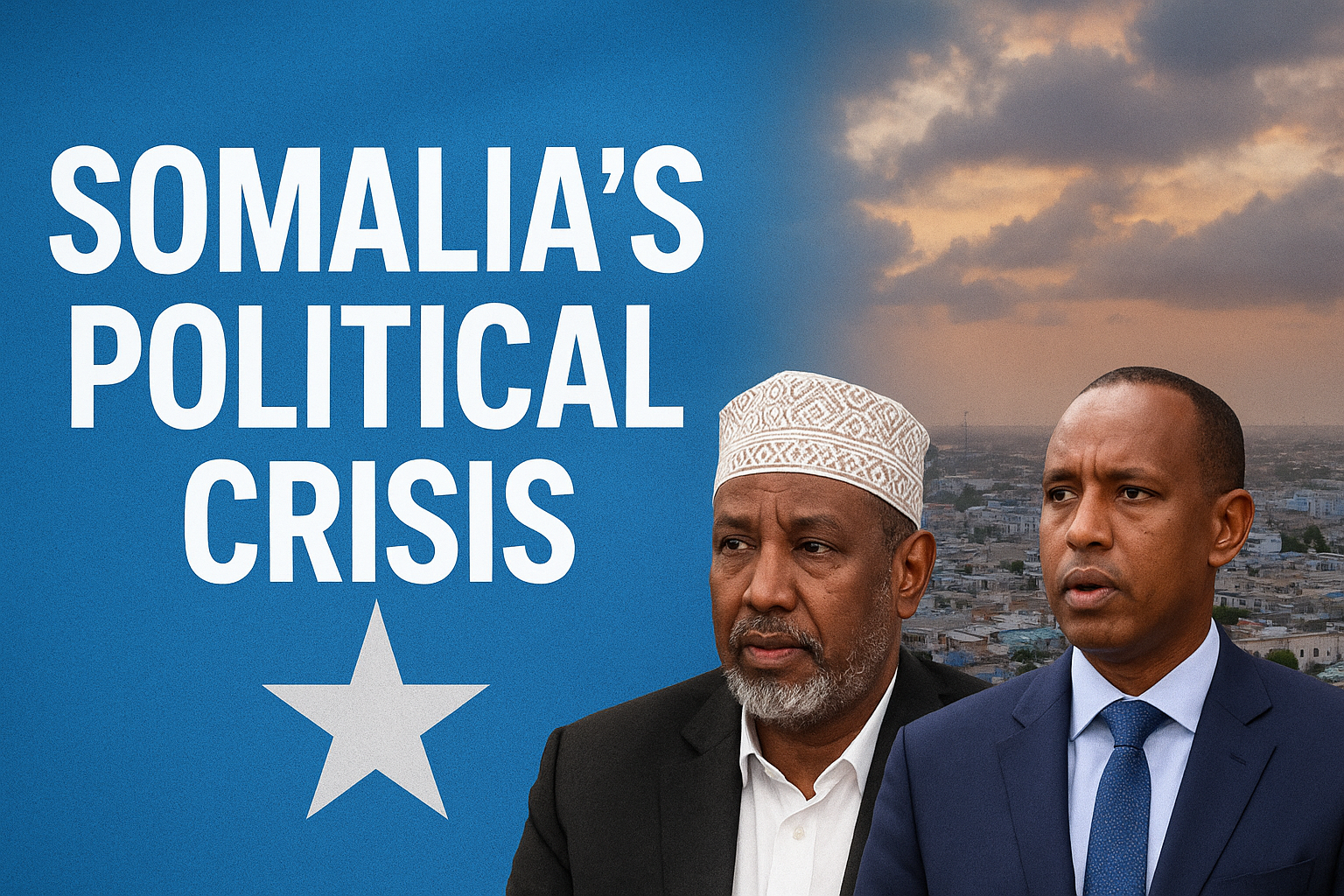
Somalia’s fragile political climate faced yet another dramatic escalation this week as leading opposition figures narrowly escaped a deadly confrontation with government security forces in the capital, Mogadishu. The incident has sparked nationwide debate about the rule of law, state violence, and the deepening rift between Somalia’s government and its political rivals.
What Happened in Mogadishu?
On the evening of the standoff, security forces reportedly clashed with members of the opposition near Wardhigley Police Station. The opposition, led by former President Sharif Sheikh Ahmed and former Prime Minister Hassan Ali Khaire, had gathered to demand the release of an elderly man allegedly beaten and detained by security personnel.
What began as a peaceful call for accountability quickly turned violent when shots were fired. Witnesses reported chaos in the area as security forces opened fire to disperse the crowd, narrowly missing the opposition leaders.
Although both Sharif Sheikh Ahmed and Hassan Ali Khaire survived without injury, the confrontation underscored the risks facing political figures who openly challenge government authority in Somalia.
Why This Matters
This event highlights several key issues shaping Somalia’s political landscape:
- Widening Political Rift
The clash reflects the growing divide between President Hassan Sheikh Mohamud’s administration and opposition coalitions. The lack of trust and frequent confrontations signal that Somalia’s political reconciliation process remains fragile. - Concerns Over Human Rights and Rule of Law
The use of live ammunition against unarmed political leaders raises serious concerns about state violence and the protection of fundamental rights in Somalia. Civil society groups have warned that such incidents could erode public confidence in government institutions. - Impact on Security and Stability
Somalia already faces significant security challenges, particularly from al-Shabab militants who control swathes of territory and carry out regular attacks. Political infighting weakens the state’s ability to confront these threats, leaving ordinary citizens caught between insecurity and instability.
Regional and International Implications
The incident is likely to draw attention from Somalia’s international partners, including the African Union, United Nations, and Western allies that have invested heavily in Somalia’s stabili
Reactions So Far
- Opposition Leaders: Sharif Sheikh Ahmed and Hassan Ali Khaire condemned the attack, framing it as a deliberate attempt to intimidate opposition voices.
- Civil Society: Human rights activists described the standoff as “an alarming abuse of power,” urging accountability and restraint from government forces.
- Government Response: As of now, Somali officials have not released a detailed statement explaining the confrontation, though pressure is mounting for transparency.
Conclusion
The survival of Somalia’s opposition leaders in this violent standoff may be seen as a moment of resilience, but it is also a stark reminder of the country’s precarious political environment. For Somalia to move forward, dialogue, accountability, and genuine political reform are urgently needed. Without these, the cycle of confrontation risks pushing the country further into instability.
Author’s Note:
Somalia’s future depends not only on defeating terrorism but also on building a political system where opposition voices are respected, and democratic freedoms are protected. The world is watching—Somalia’s leaders must rise to the occasion.