Nairobi, Kenya – September 2025
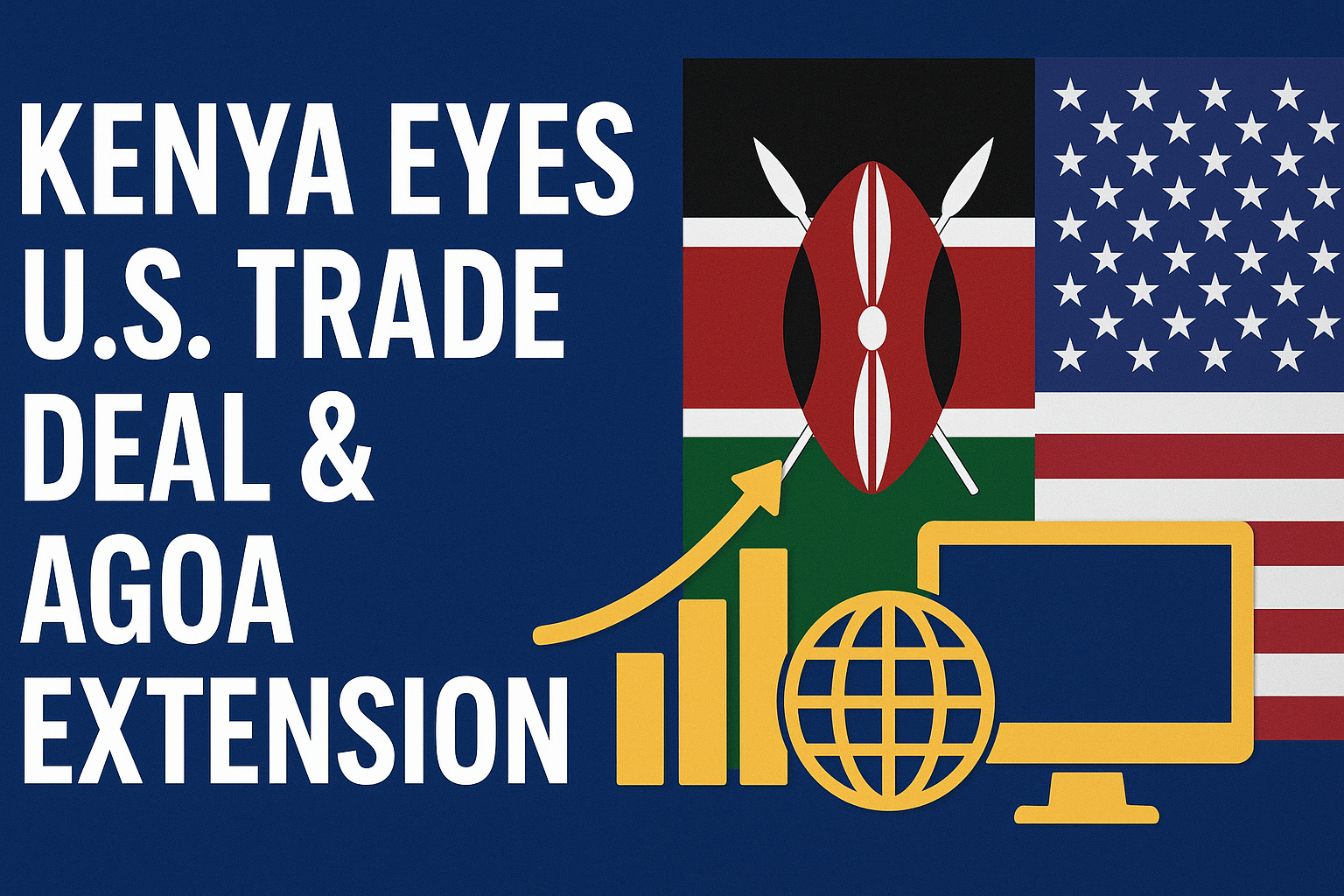
Kenya is on the verge of sealing a historic trade agreement with the United States, with President William Ruto announcing that negotiations for a bilateral trade deal are expected to conclude before the end of the year. At the same time, Kenya is lobbying for a five-year extension of the African Growth and Opportunity Act (AGOA) to protect and expand access to American markets.
What Is AGOA and Why Is It Important?
The African Growth and Opportunity Act (AGOA) is a U.S. trade program launched in 2000, allowing eligible African countries to export certain products to the U.S. duty-free. For Kenya, AGOA has been a game-changer, especially for industries such as:
- Textiles and apparel
- Agriculture (coffee, tea, flowers, and fresh produce)
- Leather and footwear
- Handicrafts and light manufacturing
An extension would safeguard jobs, stabilize industries, and encourage more investment in Kenya’s export sector.
Key Benefits of the Proposed Trade Deal
- Expanded U.S. Market Access
Kenyan products will gain stronger entry into American markets, boosting revenues and global competitiveness. - Job Creation & Youth Empowerment
New trade opportunities will strengthen manufacturing, ICT, and agriculture, creating employment for young people and women entrepreneurs. - Increased Investment Opportunities
Stable trade relations will attract more foreign direct investment (FDI), especially in export-driven industries. - Regional Trade Leadership
Kenya could cement its role as East Africa’s trade hub, opening doors for neighboring countries to benefit indirectly.
President Ruto’s Call for Partnership
President Ruto emphasized that the upcoming trade deal is about more than exports — it’s about building inclusive economic growth.
“Kenya and Africa need trade, not aid. An extension of AGOA gives us the space to grow, compete, and innovate for a stronger future.”
His remarks reflect Kenya’s broader vision of positioning itself as a digital and industrial hub within Africa.
What Experts Say About the Deal
Trade and economic experts argue that:
- A bilateral deal will allow customized terms tailored to Kenya’s needs.
- Without AGOA, industries such as textiles and horticulture could face high tariffs, reducing their competitiveness.
- With global supply chains shifting, Africa — and Kenya in particular — has the chance to become a key alternative supplier to the U.S.
The Road Ahead for Kenya
If negotiations are successful, Kenya could:
- Enter 2026 with stronger trade guarantees.
- Secure more jobs for its growing youth population.
- Build investor confidence in long-term growth.
- Position itself as a model for other African nations seeking balanced trade frameworks.
The coming months will determine whether Kenya can achieve both the bilateral trade deal and the AGOA extension, setting the stage for a new era of economic growth and global trade partnerships.