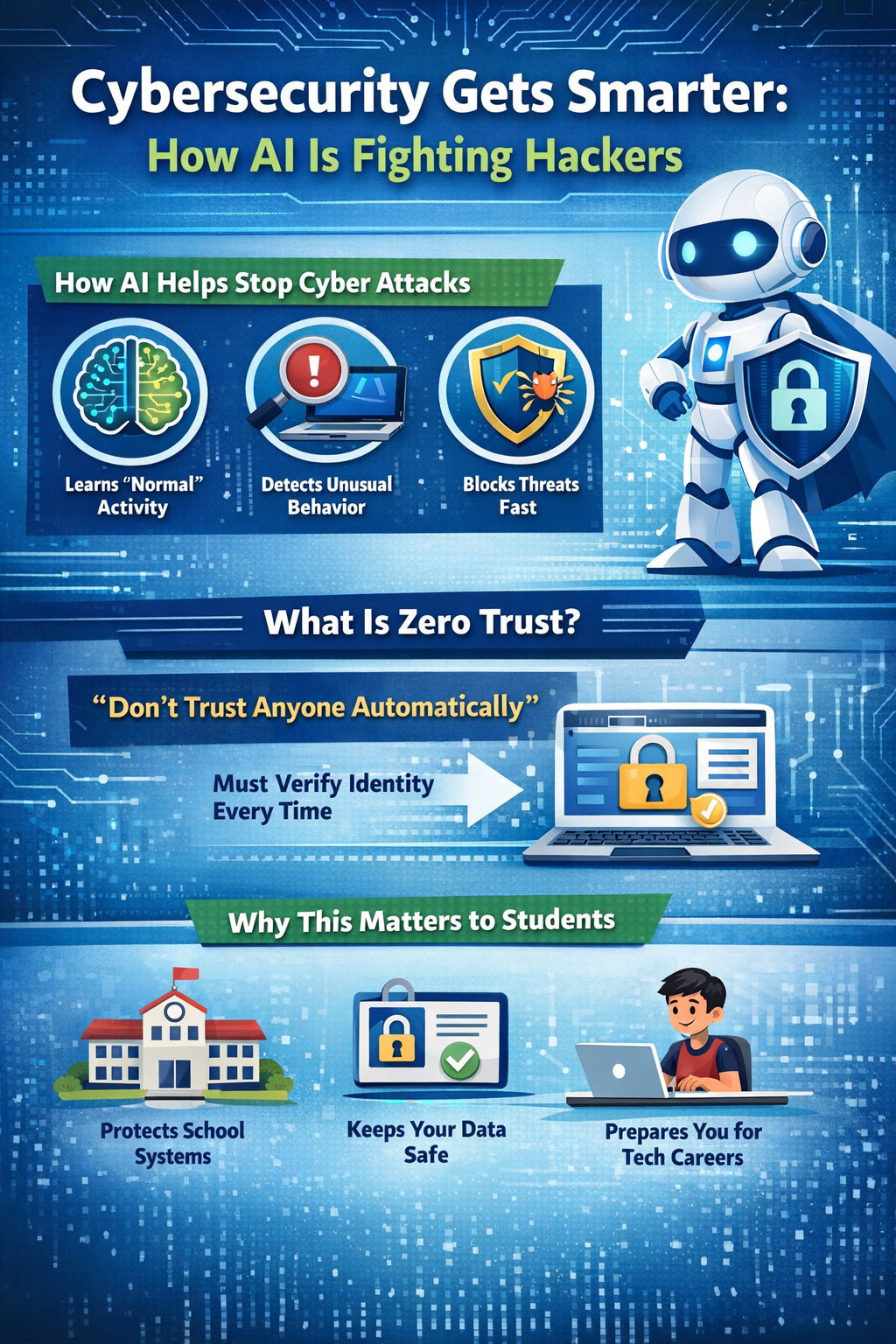
Introduction: A New Era of Digital Risk
In today’s hyperconnected world, digital transformation has become essential for organizations of all sizes. Cloud computing, remote work, Internet of Things (IoT) devices, and data-driven decision-making have unlocked unprecedented efficiency and innovation. However, these same advancements have also dramatically expanded the attack surface for cybercriminals. As a result, cybersecurity threats are no longer occasional disruptions—they are persistent, evolving, and increasingly sophisticated.
Traditional cybersecurity approaches, which rely heavily on static rules, signature-based detection, and perimeter defenses, are no longer sufficient. Attackers now use automation, artificial intelligence (AI), and social engineering techniques to bypass conventional safeguards. In response, cybersecurity itself is undergoing a transformation.
Cybersecurity is getting smarter.
Organizations are increasingly adopting AI-driven cybersecurity systems and zero-trust security models to proactively detect, prevent, and respond to threats in real time. These modern approaches leverage machine learning, behavioral analysis, and continuous verification to stay ahead of attackers rather than merely reacting after damage has been done.
This article explores how AI-powered cybersecurity and zero-trust frameworks are reshaping digital defense, why organizations are investing heavily in these technologies, and what the future of smarter cybersecurity looks like.
The Growing Complexity of Cyber Threats
From Simple Attacks to Intelligent Threats
Cyberattacks have evolved significantly over the past decade. Early threats often involved basic malware, viruses, or unsophisticated phishing attempts. While these threats still exist, modern cybercrime has become far more complex.
Today’s attackers use:
- Advanced persistent threats (APTs) that remain hidden within systems for months
- Ransomware-as-a-service (RaaS) models that lower the barrier to entry for criminals
- AI-assisted phishing that mimics human communication with alarming accuracy
- Automated vulnerability scanning to exploit weaknesses at scale
These attacks are faster, stealthier, and more adaptive than ever before. Static defenses simply cannot keep pace.
Expanding Attack Surfaces
Modern organizations operate across:
- Cloud platforms
- Hybrid and multi-cloud environments
- Remote and hybrid workforces
- Mobile devices and endpoints
- IoT and operational technology (OT) systems
Each new connection point represents a potential vulnerability. As digital ecosystems grow, so does the challenge of securing them effectively.
Why Traditional Cybersecurity Models Fall Short
For many years, cybersecurity was built around a perimeter-based model—the idea that everything inside the network could be trusted, while everything outside posed a threat. Firewalls, intrusion detection systems, and antivirus software formed the core of this strategy.
However, this model has critical weaknesses:
- Once attackers breach the perimeter, they often gain broad access
- Insider threats are difficult to detect
- Remote work dissolves the traditional network boundary
- Static rules struggle to identify novel or unknown attacks
As attackers become more intelligent, security systems must do the same.
The Rise of AI-Driven Cybersecurity
What Is AI-Driven Cybersecurity?
AI-driven cybersecurity uses artificial intelligence and machine learning to analyze vast amounts of data, identify patterns, and detect anomalies that may indicate malicious activity. Unlike traditional tools, AI systems learn and improve over time.
These systems can:
- Analyze network traffic in real time
- Detect unusual user behavior
- Identify previously unknown malware
- Predict potential attack paths
- Automate threat response actions
In essence, AI allows cybersecurity systems to think more like attackers—anticipating moves rather than simply reacting to known threats.
Machine Learning: The Engine Behind Smarter Security
Machine learning (ML) plays a central role in modern cybersecurity. By training algorithms on massive datasets, organizations can create systems capable of recognizing subtle indicators of compromise.
Key Applications of Machine Learning in Cybersecurity
- Behavioral Analysis
ML models establish a baseline of normal behavior for users, devices, and applications. Any deviation—such as unusual login times or abnormal data transfers—can trigger alerts. - Threat Detection and Classification
Instead of relying on known signatures, ML systems identify threats based on behavior and characteristics, enabling detection of zero-day attacks. - Phishing and Fraud Prevention
AI can analyze email content, sender behavior, and communication patterns to identify phishing attempts with high accuracy. - Malware Detection
Machine learning can recognize malicious code by analyzing how it behaves rather than how it looks, making it harder for attackers to evade detection.
Proactive Security: Moving From Reaction to Prevention
One of the most significant advantages of AI-driven cybersecurity is its proactive nature.
Traditional security often works like a smoke alarm—it alerts you once a fire has already started. AI-powered systems aim to detect the conditions that could lead to a fire in the first place.
Predictive Threat Intelligence
By analyzing historical attack data and real-time signals, AI systems can:
- Predict likely attack vectors
- Identify vulnerable assets before exploitation
- Prioritize risks based on potential impact
This allows organizations to allocate resources more effectively and address threats before they escalate into full-scale breaches.
Automation and Speed: A Critical Advantage
Cyberattacks happen at machine speed. Human-only response systems simply cannot react fast enough to contain many modern threats.
AI enables:
- Automated incident response
- Real-time threat containment
- Immediate isolation of compromised systems
For example, if an AI system detects ransomware activity on an endpoint, it can automatically disconnect the device from the network within seconds—significantly reducing damage.
Understanding the Zero-Trust Security Model
What Is Zero Trust?
Zero trust is a security framework based on a simple principle:
Never trust, always verify.
In a zero-trust model:
- No user, device, or application is automatically trusted
- Every access request is continuously authenticated and authorized
- Trust is not based on network location
This approach assumes that breaches are inevitable and focuses on limiting their impact.
Why Zero Trust Is Essential in Modern Environments
With cloud computing and remote work now standard, the concept of a secure perimeter has largely disappeared. Employees access systems from multiple locations and devices, often outside traditional corporate networks.
Zero trust addresses this reality by:
- Enforcing strict identity verification
- Limiting access to only what is necessary
- Continuously monitoring activity for signs of compromise
Core Pillars of Zero-Trust Architecture
- Strong Identity and Access Management (IAM)
Multi-factor authentication (MFA) and identity verification ensure users are who they claim to be. - Least-Privilege Access
Users and systems are granted the minimum level of access required to perform their tasks. - Continuous Monitoring
Trust is not permanent—systems constantly reassess risk based on behavior and context. - Microsegmentation
Networks are divided into smaller segments, preventing attackers from moving laterally after a breach.
AI and Zero Trust: A Powerful Combination
AI and zero-trust models complement each other exceptionally well.
AI enhances zero trust by:
- Continuously analyzing user behavior to assess risk
- Adjusting access privileges dynamically
- Detecting compromised credentials or devices in real time
Together, they create a security posture that is adaptive, resilient, and far more difficult to exploit.
Organizational Investment in Smarter Cybersecurity
Why Companies Are Investing Heavily
Cybersecurity is no longer just an IT concern—it is a business priority. Data breaches can result in:
- Financial losses
- Reputational damage
- Legal and regulatory consequences
- Loss of customer trust
As a result, organizations are increasing investment in:
- AI-powered security platforms
- Zero-trust architecture implementation
- Cybersecurity talent and training
- Managed security services
The focus has shifted from minimizing costs to maximizing resilience.
Industry Adoption Across Sectors
Smarter cybersecurity is being adopted across industries, including:
- Finance: Fraud detection and transaction monitoring
- Healthcare: Protecting patient data and connected medical devices
- Education: Securing remote learning platforms
- Manufacturing: Safeguarding industrial control systems
- Government: Defending critical infrastructure
Each sector faces unique risks, but all benefit from intelligent, adaptive security models.
Challenges and Ethical Considerations
While AI-driven cybersecurity offers powerful advantages, it also introduces challenges.
Key Concerns Include:
- Data privacy: AI systems require large datasets, raising questions about data handling
- Bias in algorithms: Poorly trained models may produce inaccurate results
- Complexity: Advanced systems require skilled professionals to manage
- Adversarial AI: Attackers may use AI to evade defenses
Addressing these challenges requires transparency, responsible AI development, and ongoing oversight.
The Future of Cybersecurity: What Lies Ahead
As digital ecosystems continue to evolve, cybersecurity will become even more intelligent and autonomous.
Future trends include:
- Greater use of self-healing security systems
- Increased integration of AI threat intelligence sharing
- Wider adoption of post-quantum cryptography
- More user-centric security experiences that balance protection with usability
Ultimately, cybersecurity will move closer to an always-on, adaptive immune system for digital environments.
Conclusion: Smarter Security for a Smarter World
Cyber threats are evolving rapidly, but cybersecurity is evolving faster. AI-driven security systems and zero-trust models represent a fundamental shift in how organizations defend their digital assets.
By moving from reactive defenses to proactive, intelligent protection, organizations can:
- Reduce risk
- Improve resilience
- Protect trust in an increasingly digital world
Cybersecurity is no longer just about building higher walls—it’s about building smarter defenses that learn, adapt, and respond in real time. As digital risk continues to rise, smart cybersecurity will not just be an advantage—it will be a necessity.